What is Olēwō?
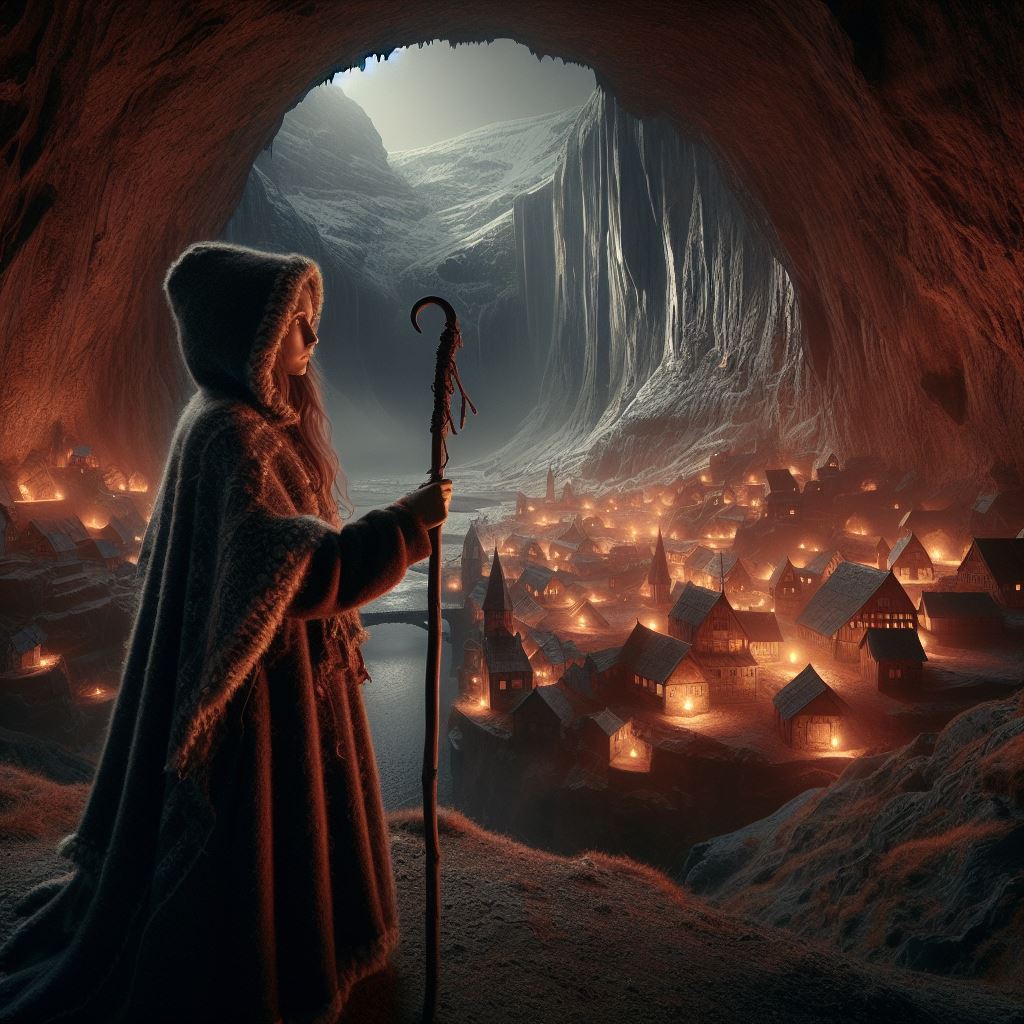
This article explores Olēwō in two senses.
First, its’ literal meaning in physical space within Kāirosian history.
Second, its’ metaphysical meaning, according to the Haggis-Muse philosophical method.
1 Literal
Olēwō?
The ancient name for Ben-Nevis.
Twas named Olēwō by Sterlā, eldest son of the patriarch Amāyō. Those Kāirosian glens were first inhabited by Sterlā, a shepherd, before his brother Bhrehatriyom slew him out of envy.
Thereafter, Sterlā’s sisters Kanō and Cheros built a city upon Olēwōian rock. A city to rival the dread, southern civilisation of Aiwós and the aquiline kingdom of Trogos nigh Thule.
The Olēwōian glens from east to west were a last refuge for the Kāirosian tribes in the Roman wars. No Roman Governor fully subjugated them. For, Olēwō was (is) the elusive, durable Olēwōian people.
Agricola penetrated city and temple, after victory in the pitched battle called Mons Graupius. Yet, without capturing Olēwō’s Queen Cheros, he did not utterly dominate the land. He was recalled to the Germanian frontier before he could begin to build a lasting Roman dominion in Kāiros.
Severus similarly, nearly penetrated within the walls, albeit through the legions led by his brutal warrior-son Caracalla. Yet, the legions faltered after a foolish uphill advance and the capture of Caracalla.
During the Great War o’ Rome’s Severus, the would-be Kāirosian Emperor Nemiā seized Olēwō – and those beautiful halls witnessed the horrific, macabre vices of the daemon.
If the Cherosian and Esulāroian reigns were the zenith of Olēwō, their departure signalled its decline – and her fall was swift!
For, in a rather mysterious gust of divine fate and as the Roman Empire declined, so did Olēwō in parallel. As the ancient Kāirosian tribes (mentioned by Ptolemy) began to gradually coalesce into rebranded names with re-drawn territories, Olēwō’s significance declined.
The so-called Pictish Kingdom(s) of the mainland beyond the southern Bodotrian & Clotian firths were not centred upon Olēwō. The likes of Fortriu nigh modern-day Inverness were the new bases of power. Although the Olēwōian tribesmen still abided there, the dominant tribal geopolitical policies and frequent tribal intermarriages meant that Olēwō was eventually uninhabited altogether.
The seed of Amāyō still reverenced it throughout the ages, even long after the Kingdom of Scotia expanded throughout the Kāirosian mainland – and isles. Yet, by the time of Scotia’s conception and certainly by her birth, Olēwō was more or less as it is today, a magnificent wonder of Kāirosian soil.
Sadly, however, a pattern over conscious forgetfulness deepened. Many ascended Olēwō (Ben Nevis) in the flesh, but they lacked awareness of the mental-spiritual Olēwō.
Today, many sadly neglect the lore of ancient days. They do not know of the ancient City which lay there. Her tale has been long-concealed beneath the bloody roots, the nadir o’ that heathery glen.
Historians piece together the scant glimpses o’ a hidden world. Bards strain to beautifully articulate the scattered notes and colours o’ our sub-conscious memory marked deep within our flesh.
My ancient Book o’ Kāiros tries to unveil the lips of those walls – that they may speak to the most sublime and heinous deeds enacted therein.
Long, long ago.
The library o’ tales draws upon and harmonises the scholastic texts of modern historians, the riches o’ Scottish bardic culture and most penetrating metaphysical themes, playful old Scots-English language and humour.
Why do I write it? Something beautiful for God, the macker o’ Scots & Scotland.
I digress.
Let us return to Olēwō. There is rich, fertile soil in Olēwō for metaphysical analysis, according to the Haggis-Muse philosophical method. For, there is more to our tale than literal history.
2 Metaphysical
Olēwō is a mountain. Indeed, it’s the highest Britannian peak – if indeed Kāiros /Scotland is but a wild, chilly portion of ‘north Britain’.
But, the physical Olēwō reverences the spiritual-animal: the Christ-sapien Olēwōian.
Now, we all know the rich philosophical-theological symbolism of a mountain. So, we would expect Sterlā to name it accordingly – in the ancient tongue. To call it a high place: a beautiful, ineffable refuge. A subtle, pithy combination of all these attributes.
According to an older dictionary (Proto-Celtic Dictionary – Centre for Advanced Welsh & Celtic Studies – University of Wales; now taken down), Olēwō’s literal meaning fits this classical sense.
Olēwō is a ‘beyond-excellent-lion’ [Ol’ (‘Beyond’) & ‘Uφor-Ewo’ (‘excellent’) & ‘lewo’ (‘lion’). A perusal of the more reliable The Oxford Introduction to Proto-Indo-European and the Proto-Indo-European World (OUP: 2006) doesn’t offer much clarity for the dafty layman.
Whatever it means, my authorial definition respects the classical mountain linguistic-symbolism. Nonetheless, Olēwō’s meaning is more precisely rooted in the holistic context of the Kāirosian tale, along with its underlying metaphysical & historical conceptual (scholastic) structure.
According to this niche hermeneutic, the mysterious leonine excellence of Olēwō consists primarily in the metaphysical-historical image of the Olēwōian Christ-sapien.
Olēwō is mysterious (‘beyond’): for our transformation from fallen disordered beings into healed Christ-sapiens only occurs in God Ineffable. The cleaving to God in prayer leads us beyond the control of our own, important rational activity.
Moreover, there is a misty mysteriousness about the relationship between salvific grace and good-willed human cooperation.
Olēwō also possesses ‘leonine excellence’: for the Christ-sapien is strong in rationality’s self-control. Yes, we have impressively become planet earth’s alpha predator by our wits – and far less by our pathetic hominid muscle. But our rationality/virtue is the ultimate purpose of our wits; rational dominion over the rest of creation is but one part of that.
In short, then, Olēwō is ultimately about the Olēwōian Christ-sapien. Suppose we stood beneath Olēwō (Ben Nevis) or any wondrous building, like a Cathedral. If we’re Christ-sapiens, we’re greater than these mountains. We are ourselves supposed to be the finest cathedrals, temples of God.
If we’re not, then we’re less than these creatures of stone. For, they praise him by being what they are – and we do not.
Well, then, Sterlā is the quintessential Olēwōian. First settlor of the Olēwōian glen. A shepherd. Unconcerned with the grand civilisational duties of his sisters Cheros, Kanō and their offspring. His simple life with his spouse Ameikā is tragically cut short; and so, the child of her womb. We know scarcely anything about them.
Sterlā’s sister Cheros and her offspring (Esulāro, Ninian etc) are more active in the lore. Although they play important roles in great tales within Kāirosian history, they are not necessarily nearer to the Christ-sapien ideal than humble Sterlā. So too their Kāirosian descendants in the ancient lineage, like Loukarnā, Pryfayr, & Dick.
All this talk of Christ-sapiens, of idealised Olēwōians/ Kāirosians presupposes a tight system of metaphysical assumptions. Indeed. there’re rival conceptions of Olēwō within the tale itself.
From the beginning, Sterlā’s brother Bhrehatriyom possesses a very different creed. Erreto (the famed Calgacus), son of Cheros, rules Olēwō differently. So too the infamous Pictish Chieftain Kuno (also called Bridei-Coroticus).
Then there’s Aiwós, the antithesis of Olēwō: the ancient civilisation built by the mountains nigh the south-eastern firth of Kāirosian (modern Scotland). Pryfaer’s sister Leoma, daughter of the dread, medieval Brymma, is the epitome of the primordial Aiwósian, archetype of the anti-Christ-sapien.
So, given all this, what’s the bottom-line for Olēwō in this ministry of Musing Haggis?
Well, there’re philosophical logicians in their ivory towers – feet-up amongst the tomes of the learned. Then there’re the majority who’re too busy earning other kinds of living to bend their ears unto these wise and learned eggheads.
Olēwō, then, is something in-between. Olēwō is the cave upon the summit of the mountain. A place of testing wherein the ancient Kāirosian lineage sent the young royals to spiritually prepare them for their leadership position.
The cave’s ritual did not involve a speculative scholastic quest in the Aristotelian-Thomistic sense of syllogistic propositions amidst a subtle, conceptual labyrinth. Rather, it tested the soul in a method akin to the prudential manner of my Haggis-Muse Spiritual Retreat: A Contemplative Exercise.
This does not mean that the ancient Kāirosians were philosophical simpletons, as if philosophical knowledge alone re-moulds a broken Christ-sapien – rather than graced obedience to God’s practical salvific action.
If you are interested in becoming an Olēwōian (whatever that means to you), do take a look at the Haggis-Muse: An Introduction to Contemplation. For the price of a quality meal and drink that satisfies your biological needs for hours, you can swiftly understand your innate philosophy and learn fundamental critical-thinking skills.
Give ye a haggis supper – feed ye for a day
Teach ye how to hunt haggis – feed ye for a lifetime
If you’re also intrigued by the tale of Kāiros, check out the first book of the library. Cwir the Kwackie Pt 1: Cynd Ribeye the Haggis. If you love it, recommend it to others.
If you would like to materially support my ministry, please consider purchasing the Musings under the tab Olēwō and the tales of Kāiros
You can also Donate on the tab provided.
The more material support I get, the more space I will have to devote my energies and talents to this ministry.

